


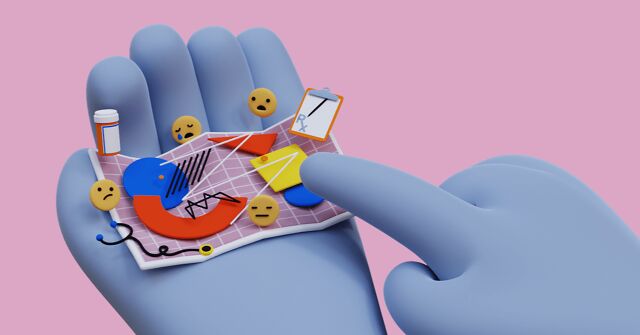

MS: A Journey of Continuous Change

When I was first diagnosed with multiple sclerosis (MS), I thought "acceptance" was just a task to check off; something I simply had to do so I could move forward. I thought that “accepting MS” meant I needed to accept my diagnosis, accept that there is no cure, and move on.
That time I Thought I Accepted My MS
The first time I truly felt like I had come to terms with my diagnosis, I thought I had figured it out. Like passing a test, I believed I had conquered the hardest part. It felt like an accomplishment.
But that feeling didn’t last long. In retrospect, I hadn't come to terms with MS itself but I had actually come to terms with the version of it I was living with at that time; a snapshot of a very specific moment in time.
Change is Just Part of the Course of MS
MS is unpredictable. Just when you think you’ve adjusted, new obstacles might emerge, making your past adaptations ineffective. This constant unpredictability can be emotionally exhausting. Frustration, anger, fear, hopelessness, and even grief are just a few of the highs and lows I've repeatedly experienced on this roller coaster.

I often felt like I was building an intricate sandcastle only for a rogue wave to sneak in and wash it away. So I would rebuild it, but it would just get washed away again. And again and again. As time went on, and I grew emotionally exhausted. I definitely found myself thinking on more than one occasion, “Screw it what's the point of rebuilding if it's just gonna get washed away?”
A Simple Shift in my Thinking
Recently, I was helping someone find a way to access the bottom shelf of a kitchen cabinet. We tried different chairs, but nothing worked. Even if we found one low enough, how would they get back up?
Then it clicked! I was thinking about the problem all wrong. The goal wasn’t finding the right chair; it was seeing inside the cabinet. Instead of bringing the person down, why not bring the shelf up? That’s when I realized the solution: pull-out cabinet shelves. Just like that—problem solved.
This moment made me realize how often I waste energy trying to force things to work the way they used to, rather than focusing on the actual goal and finding a new way to achieve it.
The Cycle of Change & Adjustment
Once I recognized this pattern, it changed how I approached MS-related challenges. Instead of feeling defeated by each new setback, I started looking for ways to work with the change instead of against it.
I now think of it like those shape-sorting toys where you fit a square block into a square hole. But one day, the square hole turns into a circle. Instead of aggressively trying to forcing the square block through and stressing out about it, I need to stop and rethink the goal. Am I trying to fit this block through a hole, or am I just trying to get it to the other side?
Similarly, coming to terms with MS is like doing the dishes; you don’t just wash them once and never have to do it again. They get dirty, you clean them, they get dirty again, you clean them again, and the cycle repeats. Acceptance works the same way. It’s not a one-time event, but an ongoing process that changes over time.
Finding Peace with the Process
This shift in thinking hasn’t been easy. Unlearning old habits and creating new thought patterns takes time. I still find myself getting frustrated when I face a new obstacle I can’t get around the way I used to. But now, instead of letting that frustration consume me, I try to remind myself to pause and rethink the problem.
Before jumping straight to frustration, I ask myself: What is my actual goal here? More often than not, that brief moment of reflection is all the help I need to find a new, simpler solution.
Life with MS is constantly changing in ways we can’t always control. But I really do believe that learning to master this cycle of change & adaptation is one of the most valuable skills we can develop.
What About You?
Have you struggled to come to terms with new changes brought on by MS more than once? How did you handle it? Share your thoughts in the comments!
Join the conversation