



Tips for Easier Gardening with MS

While multiple sclerosis has shredded the myelin coating of my nerves, it has not destroyed my resolve to keep gardening.
In fact, my resolve has “hardened off” over the years as my sense of balance worsened and my arms and legs weakened. Unfamiliar with the term? In gardening-speak, the process of hardening off tender, fragile plants—that is, slowly acclimating indoor-grown young plants to outdoor sun, wind, rain, and temperature swings—is an apt metaphor for how I gradually stepped outside my safe zone indoors and into the earth, wind and sunshine.
Here are things I do to safely and effectively plant and maintain my garden year after year - and how you can do it, too!
Choosing plants for your garden
You will need to find out these important things:
- What planting zone you’re in. This will determine what plants, trees and shrubs will survive in the ground year-round. Zones run from 1-13 in the US, with 1 being the coldest (think Alaska and Northern Minnesota), 5-6 being cold-to-moderate (think Midwest and New England), 7-8 belonging to mid-Atlantic states and the Pacific Northwest (think Virginia and Washington State), and 10-13 being sub-tropical/tropical (think Florida Keys, Puerto Rico, southern California).
- How much sun your garden beds get. Again, this will determine what plants will survive. For example, a shade garden is perfect for hostas, coral bells, and Brunnera Jack Frost, but not for sun-loving flowering plants such as daisies and lilies. Likewise, hostas and Brunnera Jack Frost will burn up if planted in a sunny bed. Coral bells, on the other hand, can tolerate a fair amount of sun!
- Where they are located on your property. Is your bed getting a lot of afternoon sun? It is likely on the west/southwest side of your property. More sun in the morning? That would be a bed on the east side. Not sure? Grab a compass, or judge by where the sun is in relation to the bed during the morning and afternoon.
I live in SE lower Michigan, so my planting zone is 6a. I experience all four seasons, with winter temps that can bottom out at -5F (Fahrenheit) in winter, and reach 90F during July and August.

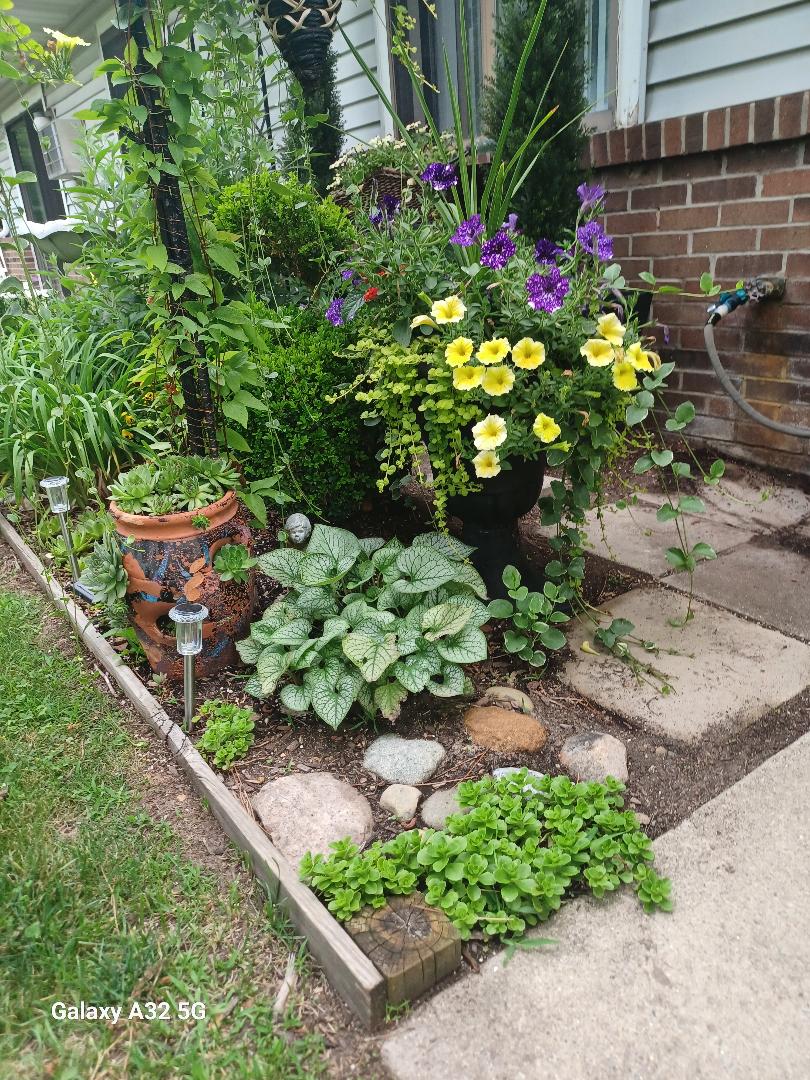
I have two beds, in which one gets a lot more sun. The sunnier bed is also a lot larger. So that bed has lots more perennials, which don’t need much maintenance. I’ll call them the Sun Bed and the Shade Bed.
Sun bed:
My perennials (plants in the ground that come back year after year) include:
- Butterfly bush
- Day Lily
- Stella de Oro Lily
- Cranesbill (ground cover geranium)
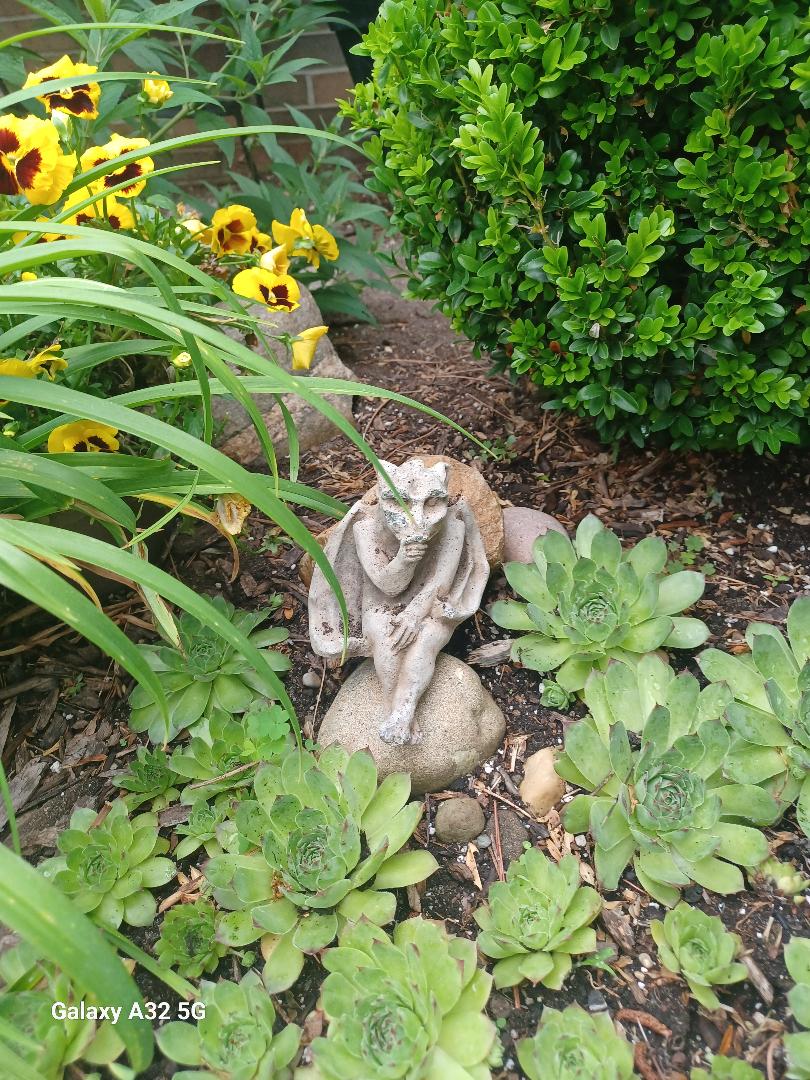
- Hens and Chicks
- Stonecrop ground cover
- Climbing rose vine
Shade bed:
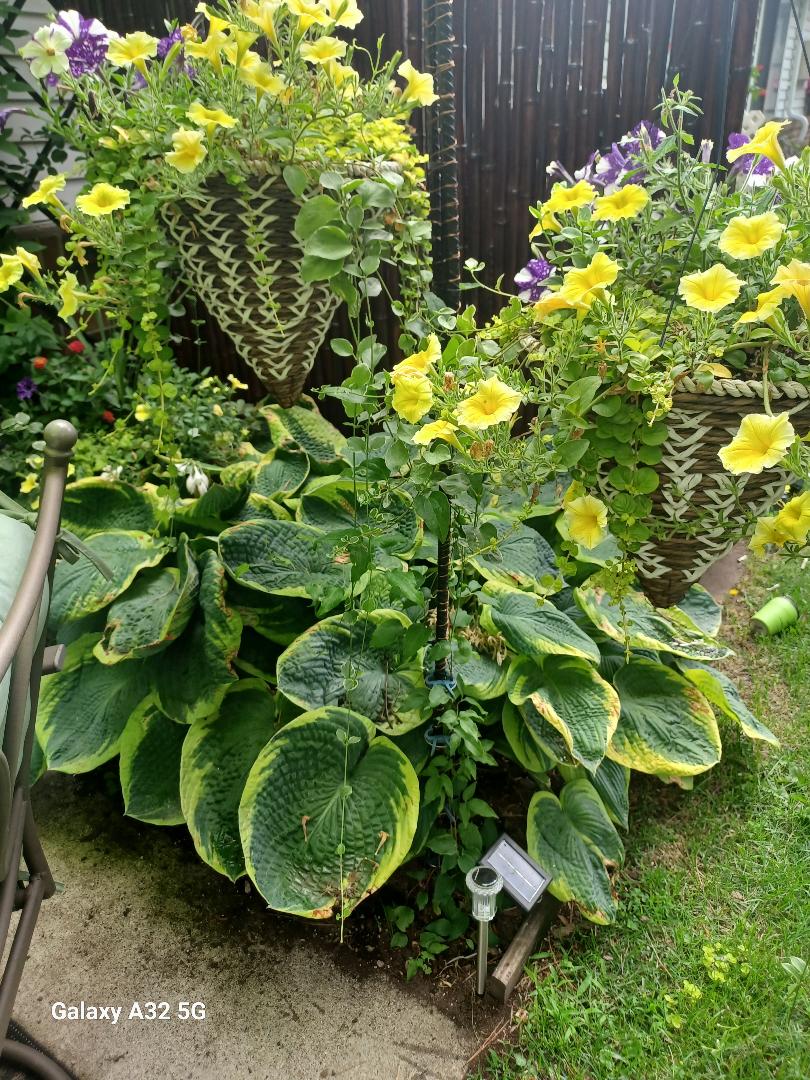
- Broadleaf Hosta
- Climbing Rose Vine
Annuals:
I also sport 4 hanging planters, an oblong plant box on legs, and 2 large patio pots. In these are various colors of trailing/mounding petunias, verbena, lantana, creeping Jenny, and vinca. In Zone 6a, these plants have to be purchased each year. They are native to tropical regions and cannot survive outside during cold winters.
Protection from the sun
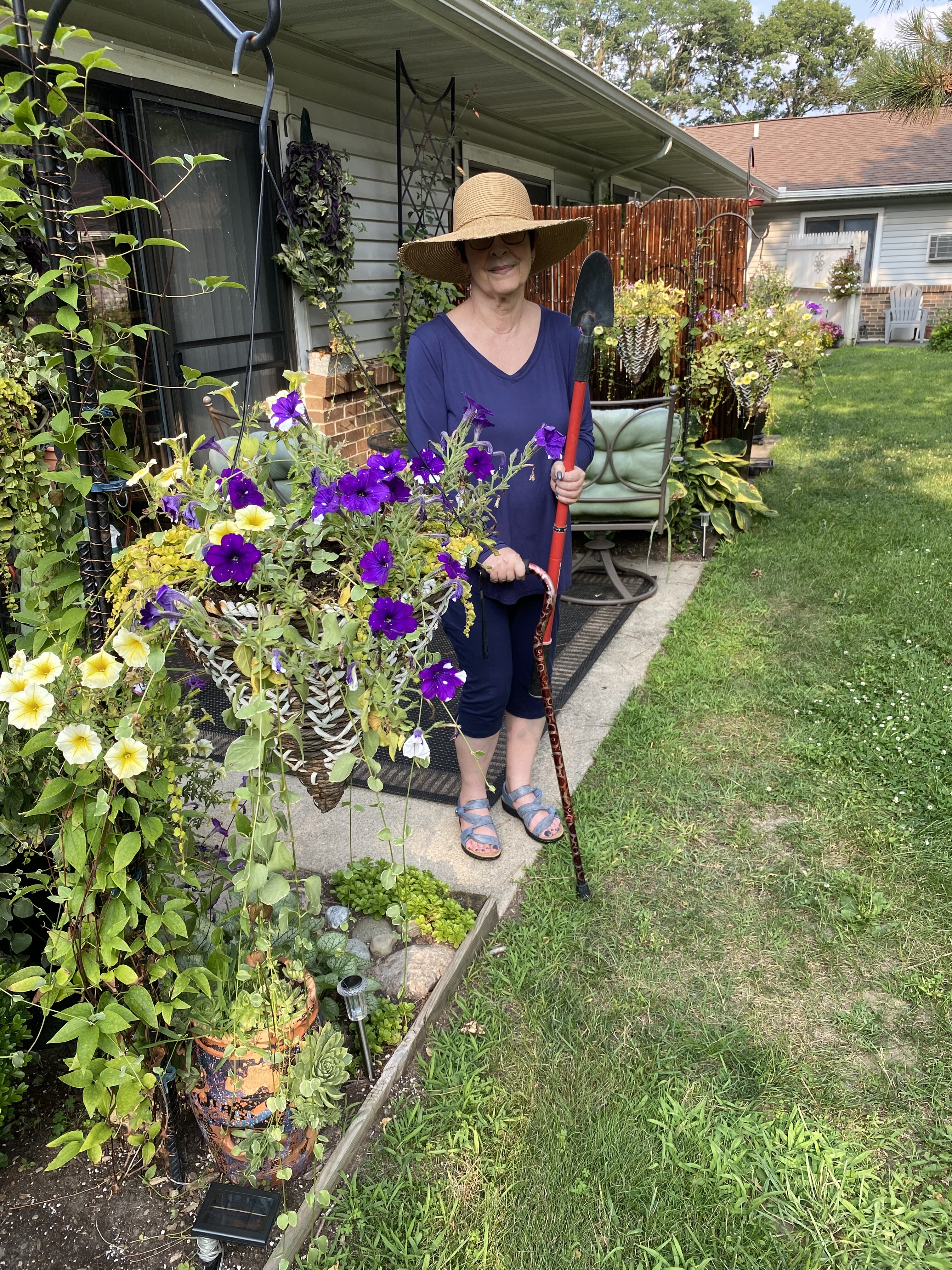
I use sunscreen SPF 50, a very wide-brimmed straw hat, gardening gloves, and a long-sleeved shirt. Before I bought the straw hat, I wore a baseball cap with a bandana draped down the back of my neck. I also put a ribbon of zinc oxide down the center of my nose for extra protection. Looked funky, but I was spared having a tanned nose in the center of a pale face—not to mention zinc oxide almost completely shields the skin from harmful UV rays. (See photos below)
Tools that make gardening easier for those who are disabled
Long-handled trowel. This is a must-have for those of us who are too weak to safely bend over, or crouch down and stand up to weed. I purchased mine on Amazon. (See photo below) There are other long-handled garden tools, too. They all start at around $18.
Garden bench. Light and portable, it can be purchased on Amazon and comes with or without wheels. I don’t use one myself, partly because I live in a garden apartment and have nowhere to store it, and partly because I get along fine without it. Prices start at around $27. The technique I call "assembly line planting" helps us plant pots while seated, with a minimum of movement.
I sit in an outdoor swivel chair and place my pedestal pots in a semicircle around me. Then I fill each pot with potting soil. Next I arrange my plants in the pots until I achieve a pleasing arrangement. The last step is to tap or pull the plants out of their cells and plant them. Water immediately. See my YouTube channel for an 8-minute demonstration.
Using these resources and techniques has allowed me to continue gardening throughout the years. Since I never lost my passion for creating beautiful outdoor spaces, I had to think of ways to keep doing it. Whether you are just beginning to garden or want to get back in the game, I hope what I’ve shared can help you.
Happy gardening!
Join the conversation