



The Cost of Hiding My MS: Moving Past the Shame of Canceling Plans

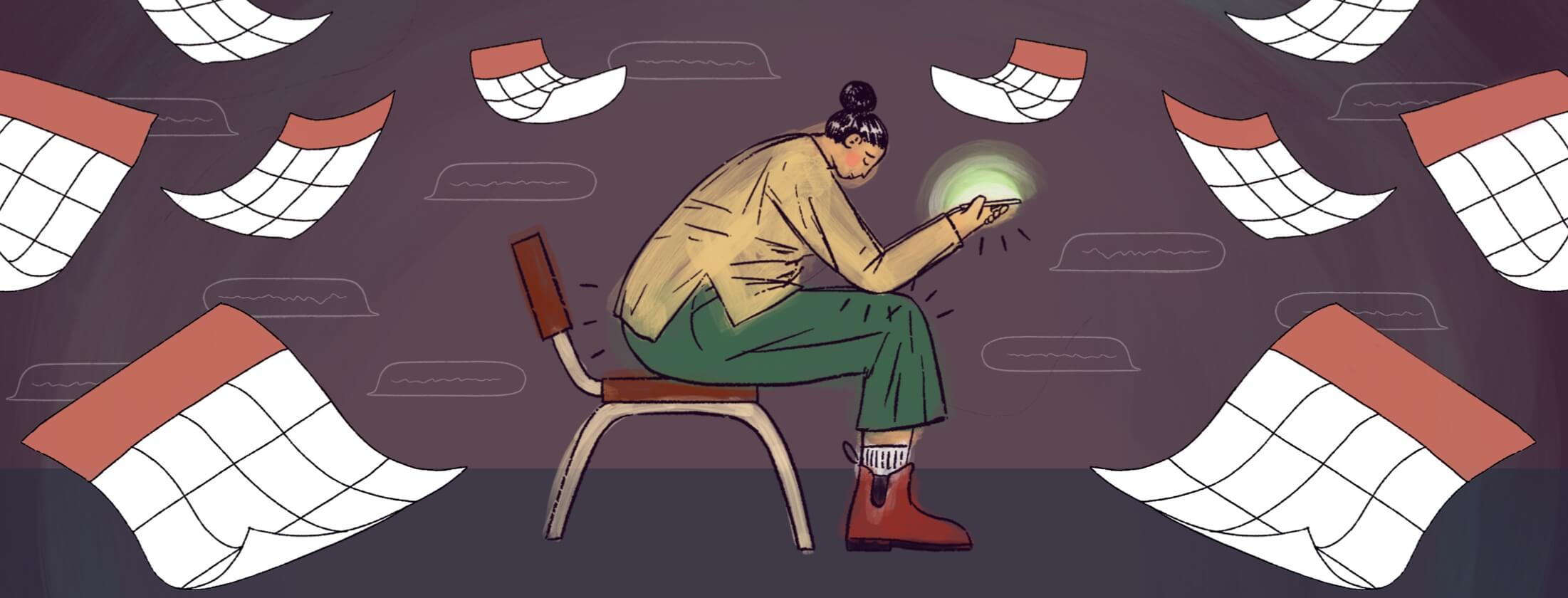
My phone had just buzzed with the message I had been dreading all day. “So, are you coming tomorrow?”
A slew of “what ifs” filled my mind and my shoulders tensed as I started to draft a reply.
“Can’t make it, sorry!” My finger reached for the send button, but now guilt was battling the dread. I paused, then retyped, “Maybe, I’ll know for sure tomorrow.” I shook my head, deleted the text, and typed, “Yep, I’ll see you there!”
Worries pushed harder as my mind played through all the worst-case scenarios and the stress took over. I retyped the message one last time and my shoulders slumped as I hit send. Like so many times before, my weekend plans had vanished along with the sound of “Message sent.”
The mental gymnastics of making plans with MS
Whether you’re a dedicated introvert, tired from the work week, or just not feeling it, we all have our reasons for canceling on plans. And with MS, the list of reasons why we can’t make it can be long: bathroom or AC availability, sudden bouts of fatigue, seating, ramps, just to name a few. Many of us need to do mental gymnastics before knowing if we can say yes or no to something. Having to do those flips and turns can be reason enough to sometimes want to opt out.

When I was first diagnosed, I rarely canceled plans because of my MS even when I should have. I wanted to prove a point: I’m in control of my life and MS isn’t going to stop me! But stop me it did. I learned that pushing past its limits is a hollow victory. On the rare occasions when I would cancel, instead of feeling proud of myself for prioritizing my health, every “Sorry, can’t today” felt like defeat. The “sorry” was less about my absence and more about me not being in control of my MS. All I wanted was to hide my symptoms from the world.
When hiding symptoms leads to isolation
In hopes of not having to decline more invitations, I tried to do everything in my power to avoid any awkward symptom-related situations. But whether I was invited to a social event or a weekend trip, a strong, shame-based voice would grow in intensity in the days leading up to the occasion, making all things that could go wrong feel believable. Trying to control every outcome became my sole, exhausting goal. Unsurprisingly, on the day of the event, I was usually too tired, tense, and emotionally distant to fully enjoy myself. It was a terrible trade: all the cost, none of the relief. And each time seemed to cost more than the last.
With time, the exhaustion of trying to keep up appearances can make isolation feel like the path of least resistance. Not because it’s the preferred choice, but because there’s no energy left to keep up the charade. Not all isolation is bad, but when it becomes a hiding strategy, it quickly loses its benefits. Prolonged isolation can be detrimental to both mental and physical health, so when I found myself in the midst of it, doing something about it had to become a priority.
Trading automatic “no's” for “yes, and…”
Now, I’m working to change my knee-jerk reaction to cancel or opt out. I focus on quieting that shame voice that pushes me to cancel my plans or make excuses. But the goal isn’t to become a social butterfly with a packed schedule. It’s to notice when I say no because I simply don’t feel like it, or because I worry I won’t be able to hide my MS symptoms. That distinction matters. I’m trying to reclaim power by seeing if I can turn a no into a “yes, and…” where I let people know what accommodations I will need to make to be able to join. Being clear about my needs can be scary, so it’s important not to rush this. One hundred small steps will get you farther than one big leap.
The “yes, and…” is slowly working its way into my arsenal of strategies for how to deal with my MS. Sometimes it’s a “Maybe, let me check some things first.” Or, when I feel especially bold, “That unfortunately isn’t going to work for me. Could we do something else?”
My phone still buzzes with the messages I dread. My shoulders still tense. But now, before I hit send, there’s a pause where a third option gets to exist: the one I’m still learning to type.
Join the conversation